15 Gentle Hand Activities for Dementia: Calm, Connection & Agency | KraftWald
Discover 15 gentle, hands-on activities designed for adults with memory changes. Boost engagement, senses, and creativity through crafts, nature, and everyday tasks
CREATIVE ACTIVITIESSPECIAL EDITION

15 Gentle Hand Activities for Dementia
Moments of Calm, Connection, and Agency
Special Edition 2
Perhaps you’ve noticed it already.
Hands that cannot rest.
They fidget, explore, search sometimes without a clear purpose.
One day an activity brings calm.
The next day it’s quietly set aside.
That’s okay.
You are not doing anything wrong.
These 15 activities are not tasks to “keep someone busy.”
They are gentle invitations ways to offer comfort, agency, and connection through the hands.
Some will resonate. Others won’t.
What matters most is not the activity itself, but the moment you share.
This is about presence.
About dignity.
About helping restless hands feel safe and supported.
🌿 1) Hand Massage with Lotion or Oil
Calming, connecting, deeply reassuring
Best for: evening wind-down, visible anxiety, frequent hand fidgeting
Why it helps:
Slow, steady touch supports relaxation and communicates safety beyond words. Hands are rich in sensory receptors, and gentle pressure often reaches where conversation cannot.
What you’ll need:
Mild lotion or neutral oil
Optional: one subtle, familiar scent
Your warm hands
A quiet, unhurried space
How to begin:
Warm the lotion between your palms. Hold one hand softly and use slow circular movements across the palm and fingers. Finish with long, calming strokes.
Let silence be enough.
Adjustments by stage:
Early: explain gently and invite consent
Middle: fewer words, steady rhythm
Late: simple holding and stroking
A dignity note:
This is not technique. It is companionship.
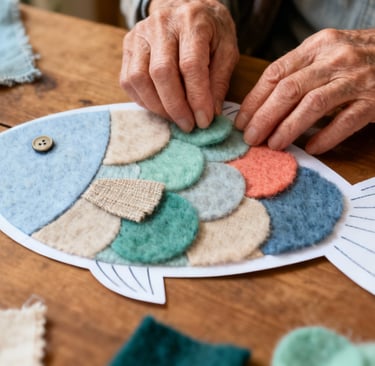
🎨 2) Fabric Collages with Simple Shapes
Tactile creativity without pressure
Best for: quiet mornings, gentle transitions
Why it helps:
Soft textures and colour provide soothing sensory input. Repetitive arranging steadies attention and encourages expression without demand.
What you’ll need:
Thick paper or cardboard
Fabric scraps (cotton, felt, wool)
Child-safe glue
Optional: buttons or soft shapes
How to begin:
Offer a few pieces at a time. Invite arranging, layering, or simply touching. Glue only if welcomed.
Adjustments by stage:
Early: free design
Middle: pre-cut pieces
Late: focus on texture and naming sensations
A dignity note:
Creation matters more than outcome.
🌸 3) Flower Arranging
Nature, scent, and quiet beauty
Best for: calm mornings or afternoons
Why it helps:
Natural scents and gentle hand movements soothe the nervous system and provide grounding through repetition.
What you’ll need:
Fresh or dried flowers
Small vase or bowl
Water (if appropriate)
How to begin:
Place flowers within reach. Invite touching, trimming, or arranging slowly together.
Adjustments by stage:
Early: independent arranging
Middle: guided placement
Late: holding or smelling petals
A dignity note:
Beauty is shared not evaluated.
🎵 4) Gentle Rhythmic Clapping or Soft Drumming
Movement that settles
Best for: transitions, visible restlessness
Why it helps:
Predictable rhythm supports emotional regulation and often awakens preserved musical memory.
What you’ll need:
Hands
Table surface
Optional: small tambourine or soft drum
How to begin:
Model a slow, steady beat. Pause. Invite joining without pressure.
Adjustments by stage:
Early: try familiar songs
Middle: keep rhythm simple
Late: tap gently nearby
A dignity note:
Participation can be brief and still meaningful.
🧵 5) Simple Sewing or Needle Felting (Supervised)
Familiar skills, quiet focus
Best for: early to mid stages
Why it helps:
Recognisable hand movements activate procedural memory and restore confidence.
What you’ll need:
Thick yarn
Felt
Blunt needle
Pre-started project
How to begin:
Demonstrate one slow motion at a time. Sit beside rather than across.
Adjustments by stage:
Early: independent stitching
Middle: simplified steps
Late: handling yarn without sewing
A dignity note:
Stop before fatigue appears.
🍪 6) Baking Simple Dough or Rolling Bread Rolls
Warmth, scent, shared purpose
Best for: mornings, family time
Why it helps:
Kneading and shaping dough awaken sensory memory linked to home and belonging.
What you’ll need:
Simple dough or ready mix
Bowl
Lightly floured surface
How to begin:
Invite pressing, rolling, or shaping. Keep instructions minimal.
Adjustments by stage:
Early: shaping independently
Middle: guided kneading
Late: gentle pressing
A dignity note:
This is contribution not distraction.
🍃 7) Nature Collages with Leaves and Stones
Grounding through the natural world
Best for: calm afternoons
Why it helps:
Natural textures reconnect body memory and provide gentle sensory grounding.
What you’ll need:
Leaves
Smooth stones
Cardboard base
How to begin:
Arrange items slowly together. Allow pauses.
A dignity note:
Let nature set the pace.
🎨 8) Finger or Brush Painting
Expression without words
Best for: emotional restlessness
Why it helps:
Colour and movement allow feelings to surface gently without explanation.
What you’ll need:
Non-toxic paint
Thick paper
Protective covering
How to begin:
Offer two or three colours. Step back.
A dignity note:
There is no need to interpret the image.
🧩 9) Sorting Objects by Shape or Colour
Order without pressure
Best for: pacing or visible agitation
Why it helps:
Sorting creates predictability and quiet structure.
What you’ll need:
Large buttons
Wooden blocks
Safe household objects
How to begin:
Sort one item together. Then allow independence.
A dignity note:
Avoid correcting or testing.
🧦 10) Folding Laundry or Sorting Socks
Everyday purpose
Best for: mid-morning routine
Why it helps:
Repetitive folding offers rhythm and restores a sense of usefulness.
What you’ll need:
Towels
Socks
Washcloths
How to begin:
Fold side by side, slowly.
A dignity note:
This is dignity in action.
📷 11) Turning Pages or Sorting Photos
Touching memory gently
Best for: quiet afternoons
Why it helps:
The repetitive motion of turning pages soothes restless hands.
What you’ll need:
Photo albums
Magazines
Printed pictures
How to begin:
Turn pages slowly together. No questions required.
A dignity note:
Repetition is welcome.
🎁 12) Decorating Small Boxes
Personalisation and agency
Best for: early to mid stages
Why it helps:
Making small choices restores autonomy.
What you’ll need:
Small box
Stickers or tape
Simple markers
How to begin:
Offer one decorative element at a time.
A dignity note:
Ownership matters.
🫙 13) Sensory Bags or Bottles
Calm through touch and sound
Best for: late afternoon restlessness
Why it helps:
Gentle squeezing or shaking regulates sensory input.
What you’ll need:
Securely sealed bags or bottles
Rice, beads, or soft fillers
How to begin:
Demonstrate slow movement before handing over.
A dignity note:
Safety always comes first.
🧿 14) Threading Beads or Lacing Cards
Fine motor steadiness
Best for: early to mid stages
Why it helps:
Repetitive fine motor movement supports focus and coordination.
What you’ll need:
Large beads
Thick string
How to begin:
Thread one bead together. Pause between each.
A dignity note:
Pause before frustration builds.
✋ 15) Gentle Hand Stretching
Release and reassurance
Best for: transitions or bedtime
Why it helps:
Slow opening and closing of the hands releases muscular tension.
What you’ll need:
Hands only
How to begin:
Model slow opening and closing. Guide gently if welcomed.
A dignity note:
Comfort always comes first.
Final Thoughts
Small, hand-centred moments can quietly transform a day.
When we meet restlessness with patience and purpose, we offer something deeper than activity. We offer safety. We offer dignity. We offer connection.
Not every idea will suit every moment and that is perfectly fine.
Your presence is the most meaningful part of every activity.
Thank you for the care you carry. 🌿
You are doing meaningful work.
Want a quick, printable version to keep handy? Download this companion guide below perfect for busy days or sharing with family